
MICROGRID SYSTEMS
Make Your Impact with Uninterrupted Power
With a PowerSecure microgrid system, your facility benefits from uninterrupted power at all times — even during blackouts and other grid disruptions. Our modular microgrid solutions use a combination of redundant energy generation technologies, which allows you to install as much capacity as necessary to continue powering operations around the clock.
Explore how PowerSecure can support your energy strategy today!
What Is a Microgrid System?
A microgrid system is a decentralized power plant that can work in conjunction with the existing electricity grid or autonomously to generate energy on-site. Using a microgrid system enables data centers, campuses, industrial parks, medical facilities and military installations to continue delivering critical services regardless of current grid conditions.
At PowerSecure, our microgrid power systems include:
- Tier 4 diesel or natural gas engines (although we also have advanced microgrid systems that use renewables such as solar photovoltaics)
- Microgrid controller, switchgear and monitoring technology — designed by our expert team of engineers and developers
Because every PowerSecure microgrid system is designed in-house, we can customize a solution to fit the unique needs of your facility or organization. Each system is delivered by experienced microgrid installers who manage integration, commissioning, and long-term operability based on site-specific requirements.
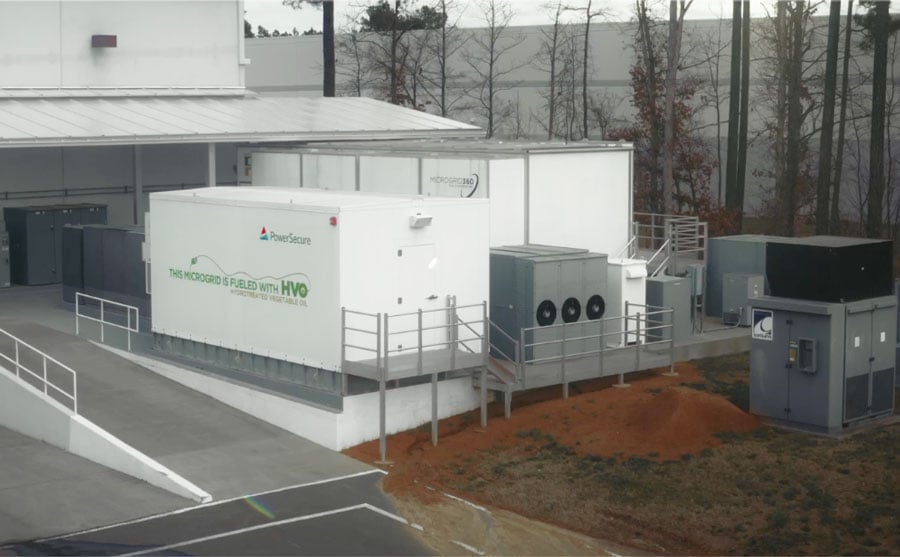
How Microgrid Power Systems Deliver Reliable, Resilient Power
Unlike traditional backup generators that only activate during a blackout, microgrid power systems provide always-on resilience. PowerSecure microgrids are designed with real-time monitoring and seamless transitions that protect operations during grid instability or support energy market participation.
Key advantages include:
- Islanded Power Operation: If the utility grid fails, the microgrid automatically transitions to on-site power without delay, ensuring critical systems remain online.
- Microgrid Load Management: Supporting mission-critical equipment while conserving resources.
- Reduced Downtime Risk: Whether during a scheduled maintenance window, energy market curtailment event or a surprise outage, microgrids keep power flowing.
- Power Quality Assurance: Facilities can benefit from frequency stability and reducing wear on sensitive equipment.
Microgrids are not just emergency solutions. Businesses using microgrids protect operations from known and unknown risks while maximizing asset ROI potential.
What’s Included in a PowerSecure Microgrid
Power System
Every PowerSecure microgrid is a fully integrated system, designed, built, and tested by our in-house team. Depending on your requirements, a system may include:
- Generators: Depending on your emissions goals, Tier 2 or EPA Tier 4 Final Factory Certified Diesel or EPA Certified Natural Gas generators can produce power for as long as there remains available fuel.
- Switchgear: Custom-built for seamless connection, load transfer, and fault protection.
- Controller: The brain of the system, managing grid-parallel microgrid operation, islanding, and real-time decisions.
- Monitoring Technology: Our commercial energy monitoring software ensures 24/7 visibility and rapid response.
- Energy Storage Systems: Optional battery storage adds backup support and increases grid flexibility.
An integrated power system matters. It ensures every component works together to deliver consistent, controllable energy.
Where Microgrid Power Systems Make the Biggest Impact
Microgrids are a proven solution for any organization with high power demands or low tolerance for downtime. Facilities that benefit most include:
- Retail and Distribution: Heavy equipment, high consumption, and reputational risks make power reliability a top priority.
- Data Centers: Require continuous uptime for hosting, processing, and data security.
- Healthcare Facilities: Need consistent power to support patient safety and life-saving equipment.
- Government and Defense: Mission-critical infrastructure demands uninterrupted, secure energy.
- Remote or Grid-Constrained Locations: In areas with unstable service or limited capacity, on-site microgrid power generation enables reliable expansion.
Microgrids also solve challenges like partial grid power, aging infrastructure, and compliance with safety standards, reducing operational risk and liability.
Scalable Microgrid Power Systems
Designed for Long-Term Growth
PowerSecure designs modular microgrid power systems that grow alongside your facility and your business priorities. Whether you are expanding operations, electrifying new equipment, or increasing uptime requirements, your microgrid can scale without disrupting existing infrastructure.
By planning for future load growth and technology integration upfront with the PowerSecure EPC team, organizations protect their investment and maintain operational continuity as conditions evolve.
With modular microgrid design, you gain:
- Lower Upfront Costs: Rather than oversizing systems from day one, facilities can install only the capacity needed today. As demand grows, additional generation or supporting components can be added incrementally, reducing initial capital exposure while preserving future flexibility.
- Future-Ready Energy Systems: Modular architecture allows seamless integration of distributed energy resources, including renewables and energy storage systems, as energy strategies mature. This flexibility supports sustainability goals, electrification initiatives, and evolving regulatory requirements without requiring a complete system overhaul.
- Operational Flexibility: As business needs change, microgrid systems can be adapted to support new operational priorities. Whether responding to load growth, energy market participation or adjusting to utility grid constraints the system can evolve without interrupting critical operations.
- Business Continuity Planning: A scalable microgrid supports long-term resilience by reducing dependence on a single utility feed and minimizing downtime risk. Facilities are better positioned to maintain operations during both planned expansions and unplanned grid events, lowering total lifecycle costs and operational risk over time.
Looking for a Renewable Microgrid Solution?
As part of a larger advanced or hybrid microgrids, you can incorporate renewable energy options including solar PV installations, energy efficiency audits, and the latest on-site battery storage technology. As the world rapidly decarbonizes, integrating these technologies will allow you to meet increasingly stringent air quality targets.
Let’s work together to meet your energy sustainability goals.
Frequently Asked Questions
How Is a Microgrid Different from Traditional Backup Generators?
Traditional backup generators typically activate only after a power failure and support a narrow set of loads for short durations. These generators operate independently and do not automatically respond to facility or grid needs.
Microgrid power systems integrate generation assets, switchgear, and a central controller that actively manages load, and transitions between grid-connected and islanded power operation. This coordination allows facilities to maintain stability and prioritize critical operations automatically. A microgrid is an on-site power system engineered for both backup and resilience.
Can a Microgrid Operate Alongside the Utility Grid?
Yes. Most commercial microgrid systems are designed to operate in parallel with the utility grid during normal conditions. This grid-parallel microgrid configuration allows facilities to use utility power when it is available while keeping on-site generation ready at all times.
If a grid disturbance occurs, the microgrid system detects the issue and transitions smoothly to islanded operation. When utility service is restored, the system reconnects safely. This design supports both daily operations and long-term reliability without disrupting existing utility infrastructure.
What Happens to Operations During a Power Outage?
When a power outage occurs, the microgrid controller identifies the loss of utility power and initiates a transition to islanded operation. This process is automated and designed to minimize disruption to critical loads.
Microgrid load management ensures that essential systems remain powered while noncritical loads can be shed if needed. The result is continued operation for key processes, improved power quality, and reduced downtime during grid failures. Facilities retain operational control instead of reacting to external outages.
How Much On-Site Power Capacity Do We Actually Need?
Capacity planning is based on critical load requirements, operational priorities, and future growth rather than estimates or averages. PowerSecure evaluates which systems must remain online during disruptions and designs the microgrid power generation capacity accordingly.
A modular microgrid design allows facilities to start with the capacity they need today and expand later. This approach avoids oversizing while protecting long-term flexibility. As loads increase or operational needs change, additional generation or energy storage systems can be added without redesigning the entire system.
How Long Does It Take to Design and Deploy a Microgrid?
Deployment timelines vary based on project scope, permitting requirements, and equipment availability. In most cases, the process includes engineering design, interconnection approvals, equipment procurement, and on-site installation.
PowerSecure manages these steps in-house, which reduces coordination delays and construction risk. Early planning and clear project alignment help minimize disruption to daily operations during deployment.
What Ongoing Maintenance or Support Does a Microgrid Require?
Microgrid power systems require routine maintenance similar to other on-site power systems. This includes scheduled service for generators, inspections of switchgear, and updates to control software.
PowerSecure offers PowerControl®, a long-term service and monitoring to support system performance and predictive maintenance. Ongoing visibility allows issues to be identified early and addressed before they affect operations. Maintenance and support are treated as part of the complete microgrid power solution.
Can a Microgrid Be Expanded or Upgraded in the Future?
Yes. Scalability is a core advantage of modular microgrid design. Facilities can add generation, integrate distributed energy resources, or incorporate energy storage as needs evolve.
This flexibility supports facility expansion, electrification initiatives, and changing regulatory requirements. Designing for growth from the beginning helps reduce future capital risk and supports long-term reliability.
Is a Microgrid the Right Fit for Our Facility?
A microgrid is often a strong fit for organizations with low tolerance for downtime, limited grid reliability, or long-term growth plans. Facilities that support critical operations or face high outage costs typically see the greatest value.
PowerSecure works with clients to assess operational risk, power requirements, and future objectives. This consultation helps determine whether a basic or more advanced microgrid system is appropriate, ensuring the solution aligns with real needs rather than assumptions.